

Choosing the Perfect Construction Materials for Your Home
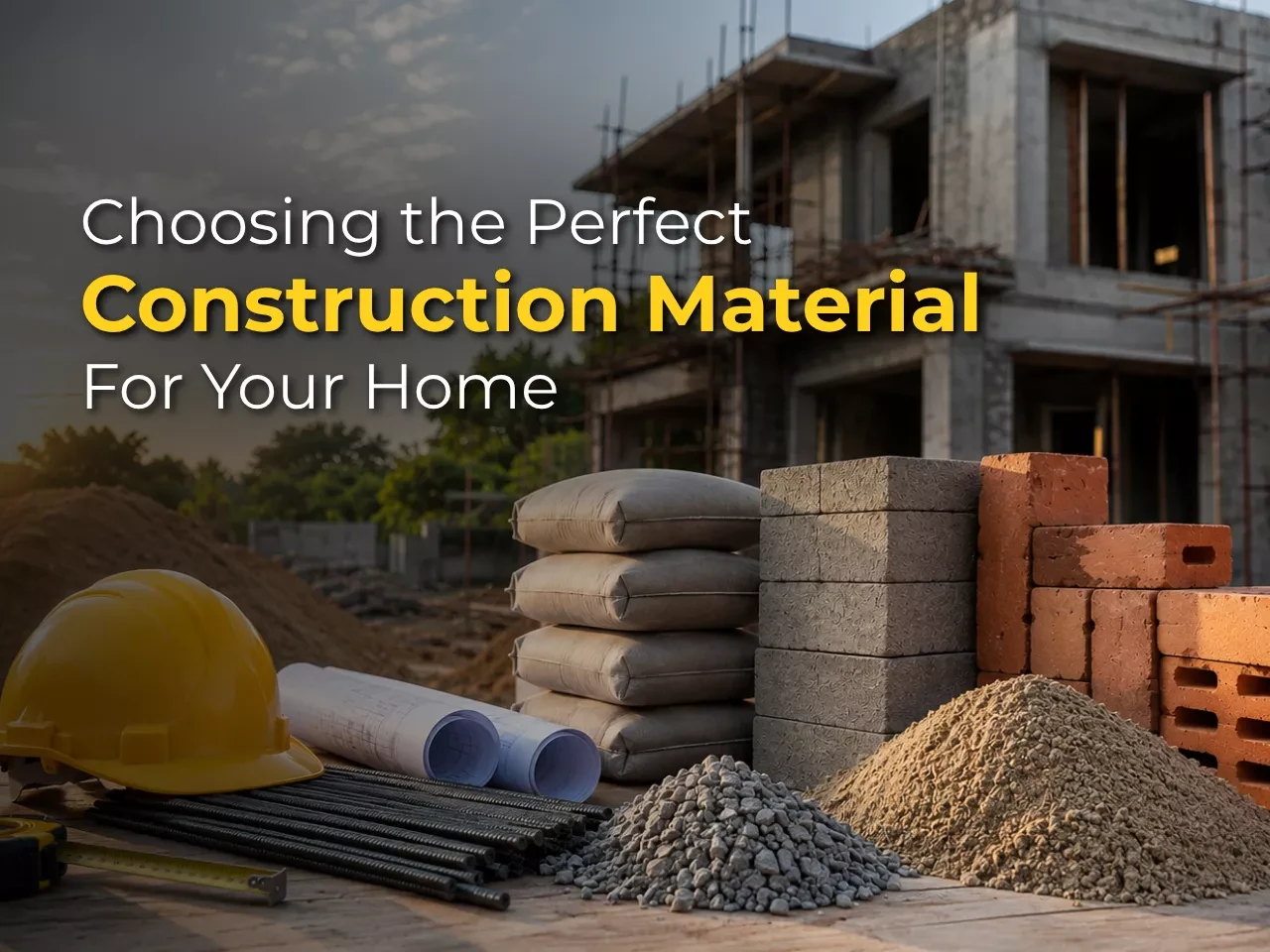
Building your dream home is one of the biggest investments of your life. Every homeowner wants a house that is strong, safe, beautiful, and long-lasting. However, many people focus only on the design and budget while ignoring one of the most important factors—choosing the right construction materials.
The quality of your home depends on the quality of the materials used during building construction. From cement and bricks to roofing sheets, plywood, and concrete, every material plays an important role in the strength and durability of your house. Choosing the right building material can also help reduce maintenance costs, improve safety, and increase the life of your home.
In this blog, you'll learn how to choose the perfect construction and building materials, what materials are essential for house construction, and how to select a reliable building materials supplier like The Constructions Hub for your project.
Why Choosing the Right Building Material Matters
A beautiful home is not built by design alone. It starts with choosing quality building construction materials. Many homeowners try to reduce costs by buying cheaper materials. While this may save money initially, poor-quality materials often lead to cracks, leakage, repairs, and higher maintenance costs in the future. Selecting the right materials is one of the smartest investments you can make, whether you're building a small house or a large commercial project.
Choosing premium construction materials offers several benefits:
- Better structural strength
- Longer life of the building
- Improved safety
- Lower maintenance costs
- Better resistance to weather
- Higher property value
Essential Construction Materials for House Construction
Every home requires different materials depending on the design and location. Each material has a specific purpose, so it is important to choose products that meet quality standards. However, some materials are essential for almost every house construction project.
Essential construction materials:
- Cement
- Sand
- Bricks or Concrete Blocks
- Steel
- Ready Mixed Concrete
- Roofing Materials
- Plywood
- Ceiling Materials
- Doors & Windows
- Cladding Materials
- Electrical & Plumbing Materials
Choosing the Best Cement for House Construction
Cement is one of the most important materials used in building construction. It binds different materials together and provides strength to the entire structure. That's why choosing the best cement for house construction should never be based only on price. Always purchase cement from trusted cement suppliers near me or authorised dealers like The Constructions Hub to ensure quality and authenticity. Good-quality cement offers better bonding strength, higher durability, crack resistance, moisture protection and longer building life.
Ready Mixed Concrete vs Site-Mixed Concrete
Concrete forms the backbone of every building. Today, many builders prefer ready mixed concrete because it offers consistent quality and saves time during construction. If you're searching for ready mixed concrete near me, always choose a trusted supplier that follows quality standards.
Ready Mixed Concrete
Ready mixed concrete is prepared in a controlled batching plant and delivered directly to the construction site.
Benefits
Consistent quality
Faster construction
Less material wastage
Better strength
Saves labour costs
Site-Mixed Concrete
Site-mixed concrete is prepared manually at the construction site. It is commonly used for smaller residential projects but requires proper supervision to maintain the correct mix ratio.
Reinforced Concrete – Why Is It Important?
Concrete is strong under compression but weaker under tension. That's why steel reinforcement is added to create reinforced concrete. Reinforced concrete is widely used in foundations, beams, columns, Roof Slabs, staircases, etc. Today, advanced materials like glass fibre reinforced concrete and fiber reinforced concrete are also used in modern construction to improve durability and reduce cracking. These materials provide additional strength while maintaining a lighter structure in certain applications.
Bricks or Concrete Blocks – Which Is Better?
Another common question homeowners ask is whether they should use traditional bricks or concrete blocks. Before making a decision, always compare cement brick prices, availability, and your project's structural requirements. Your contractor or architect can recommend the best option based on your location and building design.
Both options have their advantages.
| Feature | Bricks | Concrete Blocks |
| Strength | High | Very High |
| Weight | Medium | Lightweight Options Available |
| Construction Speed | Moderate | Faster |
| Thermal Insulation | Good | Better |
| Cost | Affordable | Depends on Size |
How to Choose Quality Construction Materials
Choosing the right material isn't only about selecting the biggest brand. Before purchasing any construction materials, always check:
Material Quality: Never compromise on quality just to reduce costs.
Supplier Reputation: Buy from trusted building materials suppliers with positive customer reviews.
Product Certification: Always check whether the material meets industry quality standards.
Weather Conditions: Different locations require different materials.
For example, coastal areas may require moisture-resistant products, while high-temperature regions may need better insulation materials.
Choosing the Right Roofing Materials for Your Home
The roof is one of the most important parts of any building. It protects your home from rain, sunlight, wind, and changing weather conditions. That's why selecting the right roofing materials is just as important as choosing quality cement or concrete. Today, there are many types of roofing sheets available for residential, commercial, and industrial buildings. The best option depends on your budget, climate, and building design. Here are some of the most popular roofing materials.
Steel Roofing Sheet
A steel roofing sheet is one of the strongest and most durable roofing options available today. It is commonly used in factories, warehouses, commercial buildings, and modern homes.
Benefits
- High strength
- Long life
- Weather resistant
- Low maintenance
Aluminium Roofing Sheet
An aluminium roofing sheet is lightweight and highly resistant to rust, making it a good choice for coastal and humid areas.
It offers:
- Corrosion resistance
- Easy installation
- Long durability
- Modern appearance
Polycarbonate Roofing Sheet
If you want natural sunlight inside your space, a polycarbonate roofing sheet is a great option. They are lightweight, strong, and available in transparent finishes.
These sheets are commonly used for:
- Car Parking
- Balconies
- Greenhouses
- Walkways
- Terrace Covers
PVC & UPVC Roofing Sheets
Both PVC roofing sheets and UPVC roofing sheets are popular because they are affordable and require very little maintenance. They also provide good resistance against moisture and chemicals.
These sheets are widely used in:
- Warehouses
- Industrial Buildings
- Farmhouses
- Temporary Structures
- Storage Areas
Corrugated & Stone-Coated Roofing Sheets
A corrugated roofing sheet is one of the most commonly used roofing materials because of its strength and affordability. If you want both durability and an attractive appearance, a stone-coated roofing sheet can be an excellent choice for residential projects.
Wall & Ceiling Materials
Walls and ceilings not only improve the appearance of your home but also provide insulation, durability, and comfort. Today, modern construction uses several advanced materials to create stronger and more attractive interiors.
Flooring & Interior Materials
Your flooring also plays an important role in the durability and appearance of your home. If you're confused between epoxy flooring and traditional tiles, read our detailed guide: "Is Epoxy Flooring Better Than Tiles? Complete Guide with Comparison" to understand the benefits, costs, and which option is best for your space.
Gypsum Wallboard
Gypsum wallboard is becoming increasingly popular in modern homes and commercial buildings. It also helps reduce construction time compared to traditional wall systems.
It is widely used for:
- Interior Walls
- Partitions
- False Ceilings
Benefits
- Lightweight
- Fire resistant
- Smooth finish
- Easy installation
Gypsum Sheet
A gypsum sheet is commonly used for decorative ceilings and partition walls. Many architects recommend gypsum because it provides a clean and elegant finish.
It offers:
- Better finishing
- Crack resistance
- Easy maintenance
- Modern interior look
Ceiling Tiles & False Ceiling Materials
A false ceiling improves both the appearance and functionality of your home. Popular false ceiling materials include:
- Gypsum Boards
- PVC Panels
- POP
- Metal Ceiling Panels
- Wooden Panels
Similarly, ceiling tiles are widely used in offices, hospitals, schools, shopping malls, and commercial buildings because they are easy to install and maintain. If you're planning modern interiors, choosing the right ceiling material can make a significant difference.
PVC Ceiling Tiles & PVC Ceiling Sheets
Modern homeowners also prefer PVC ceiling tiles because they are waterproof, termite-resistant, and easy to clean. When selecting PVC products, compare the PVC ceiling sheet price along with quality and warranty instead of choosing only the lowest-priced option.
Sustainable Building Materials
Today, many homeowners prefer sustainable building materials because they reduce environmental impact while improving energy efficiency. Using sustainable materials not only benefits the environment but can also reduce long-term maintenance and energy costs.
Some popular eco-friendly materials include:
- Fly Ash Bricks
- Recycled Steel
- Bamboo
- AAC Blocks
- Energy-Efficient Roofing
- Insulated Wall Panels
Pre-Engineered Buildings
Modern construction is rapidly adopting pre engineered buildings (PEBs) because they are faster to construct and cost-effective. PEBs reduce construction time while maintaining structural strength and quality.
These buildings are commonly used for:
- Warehouses
- Industrial Buildings
- Commercial Spaces
- Manufacturing Units
- Storage Facilities
How to Choose the Right Building Materials Supplier
Choosing quality materials is important, but selecting the right building materials supplier is equally important. Even the best products can create problems if they are not genuine or are delivered late.
Before purchasing any construction materials, keep these points in mind.
1. Check Product Quality
Never buy materials based only on price. Always verify product quality, certifications, and manufacturer details.
2. Compare Prices
Different suppliers may offer different prices. Compare quotations before making a decision, but don't compromise on quality just to save a little money.
3. Choose Experienced Suppliers
Experienced building materials suppliers understand your project requirements and can recommend the right products.
4. Delivery Support
Timely delivery keeps your project running smoothly. Delayed materials can increase labour costs and extend your construction timeline.
5. One-Stop Solution
Instead of buying materials from multiple shops, choose a supplier who can provide all your construction needs in one place. This saves both time and effort. The Constructions Hub connects homeowners, builders, and contractors with trusted suppliers. We make it easier to source quality building construction materials at competitive prices.
Understanding House Construction Cost
One of the biggest questions homeowners ask is: "How much does it cost to build a house?" Many people also search for construction cost per sq ft before starting their project. The actual budget varies depending on the materials and specifications you choose, while cost per square foot gives a rough estimate. Instead of focusing only on reducing costs, invest in quality materials that provide better durability and lower maintenance in the long run. The answer depends on many factors.
House construction cost depends on:
- Plot Size
- Building Design
- Number of Floors
- Material Quality
- Labour Charges
- Location
- Interior Finishing
- Roofing Materials
- Plumbing & Electrical Work
Why Quality Building Materials Save Money
Many homeowners believe premium materials are expensive. In reality, quality materials often reduce future expenses. A small investment today can save significant repair costs in the future.
Good materials help:
- Reduce repair costs
- Prevent cracks and leakage
- Increase building life
- Improve structural safety
- Lower maintenance expenses
- Increase property value
Why Choose The Constructions Hub?
Building a home involves hundreds of decisions, and choosing the right materials is one of the most important ones. The Constructions Hub help homeowners, builders, architects, and contractors find quality construction products through trusted suppliers. Our expert team here to help, whether you're planning a new house construction, renovating an existing property, or looking for reliable building material supply.
You can find everything you need in one place with access to a wide range of products—from cement, steel, bricks, roofing sheets, gypsum boards, plywood, cladding materials, ready mixed concrete, and much more. Our goal is simple to help you build stronger, smarter, and longer-lasting homes.
We offer:
- Verified products
- Trusted brands
- Fair pricing
- On-time delivery
- Good customer support
Conclusion
Building your dream home is about much more than choosing a beautiful design. Every material you select plays a role in the strength, safety, and lifespan of your house. From cement and concrete to roofing sheets, gypsum boards, plywood, and cladding materials, every decision matters. Instead of choosing materials based only on price, focus on quality, durability, and long-term value.
If you're looking for trusted building materials suppliers, quality construction materials, or expert guidance for your next project, The Constructions Hub is here to help you make the right choice. Because we don't just help you build houses; we help you build homes that last for generations.